
















About our campaign
Disasters and crises cause legal problems and increase vulnerability.
We’ve seen first-hand how legal need shifts during disasters and crises. We’re using our evidence, and the experiences of the people we’ve helped, to call on all levels of government to act.
Why disasters make legal problems worse
When crises and disasters occur, we know that existing legal problems are exacerbated and new legal needs emerge. Often these legal problems impact the most disadvantaged people in our society, as well as uncovering newly at-risk cohorts and communities.
Unexpected legal problems can affect people’s health, financial stability and relationships. In these times of crisis, people need to be able to access legal help as quickly and seamlessly as possible.
How we’re helping strengthen legal responses to disasters
Over more than a decade, our team of expert lawyers have played a central role in the legal response to disasters and crises, including:
- 2009 Black Saturday bushfires in Victoria
- 2017 Bourke St Massacre in Melbourne
- 2019-2020 bushfires primarily in Victoria and NSW
- 2020-2021 COVID-19 crisis.
Based on our extensive experiences responding to disasters and crises, as well as the lived experience of people we’ve assisted, we’re calling for more support for strategic and coordinated legal responses to disasters.
7 recommendations for better legal responses to disasters
We’re calling for more support for scaled-up, digitally enabled, strategic and coordinated legal sector responses to meet legal need.
We strongly recommend that state and federal governments commit to delivering coordinated, consistent, and coherent responses to disasters that put the needs of people and organisations experiencing disasters, or working to address disasters, front and centre.
Every jurisdiction should have a pre-planned disaster response framework for the legal assistance sector. This framework should be as consistent and complementary across jurisdictions as possible, given the likelihood that disasters will cross state borders.
The framework should cover agreed approaches to:
- communication with individuals and affected communities and outreach strategies (which may need to vary depending on the nature of the disaster)
- division of responsibility for the legal response where clear (e.g. by demographic, issue area)
- coordination of pro bono resources
- requirements for regular review and updates to reflect the evolving service industry and the technology landscape
- strategies for engagement and connection to non-legal service providers and disaster responders to ensure that legal needs are identified and appropriately directed to services
The framework must also be sufficiently flexible to support a local, on-the-ground response and/or a digital first response depending on the nature of the disaster and its impacts on service delivery.
Government funding should be quarantined to support legal assistance sector responses to disaster.
The process for applying the quarantined funding in a disaster response setting should be clear and transparent. To the extent that an agreed disaster response framework is put in place, quarantined funding should appropriately align with the roles that organisations are committed to playing in disaster response. In particular, roles that do not fall neatly into the direct delivery of units of legal assistance but that are critical to an effective response should be explicitly provided for, including:
- Work that raises public awareness of legal issues, preventative work and education and post-disaster outreach
- Cross-sector coordination work and liaison with non-legal service providers (e.g. crisis response centres)
- Coordinating and mobilising pro bono resources
It is critical that more work is undertaken to define what constitutes a “disaster” to ensure that future issues experienced in Australia can, as far as possible, fall either clearly in or clearly out of disaster response frameworks. Any definition should be regularly reviewed and updated given the rapidly changing technological, environmental and geopolitical landscape.
State and federal governments should acknowledge the extraordinary commitment of the legal profession to providing pro bono responses to disasters. Governments should also support sector-wide infrastructure proposed by Justice Connect that will support effective and efficient collaboration between the legal assistance sector and pro bono lawyers in a disaster response setting.
We urge state and federal governments to support all areas of public legal services, including community legal centres, legal aid commissions, and courts and tribunals, to undertake digital transformation work. A digitally transformed sector will be better positioned to respond to disasters at scale, and will be better positioned to provide continuity of services during and post-disaster.
Legal help for not-for-profits and volunteer-involving groups should be regarded as a vital component of the disaster response service ecosystem at a national level. There is a need for stronger government promotion, funding and endorsement of professional (including legal) support services that have the expertise to assist the community sector with disaster preparedness and recovery on a pro bono basis.
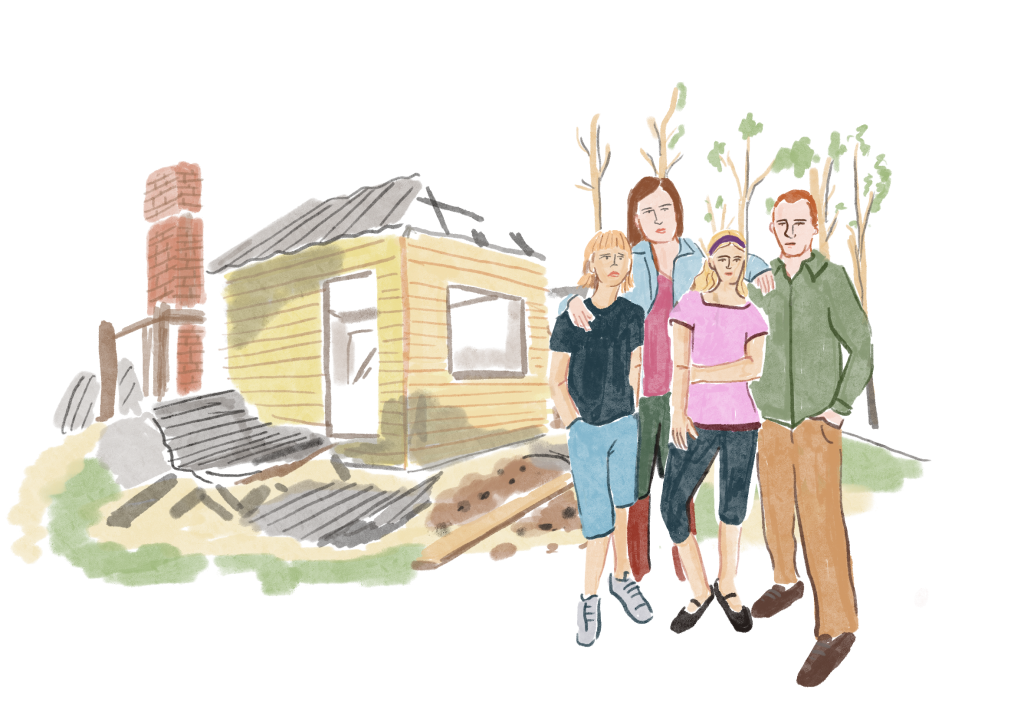
Disaster Legal Support Resource Hub
We’ve created a hub of resources for people living and working in communities impacted by, or at risk of, disasters.
Find a range of legal information resources and links to other sources of information for individuals, small businesses, community lawyers and other frontline workers.
Explore our other campaigns





Donate now
Your donation will help make justice more accessible, more efficient, and more human.